-
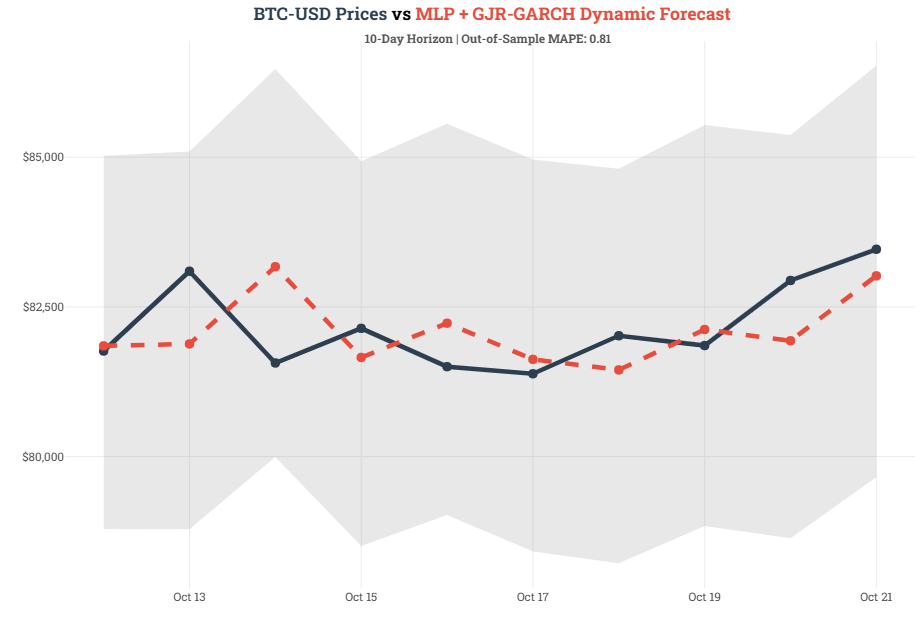 Continue reading →: Hybrid Machine Learning & Financial Econometrics: Building Volatility-Aware Dynamic Forecast Bands for Bitcoin
When forecasting high-volatility financial assets like Bitcoin (BTC-USD), standard point-prediction models—whether classical ARIMA or deep neural networks—often fall short. A point estimate tells you where the model expects the price to go, but it completely ignores market regime shifts and changing risk levels. In this article, we construct an end-to-end…
-
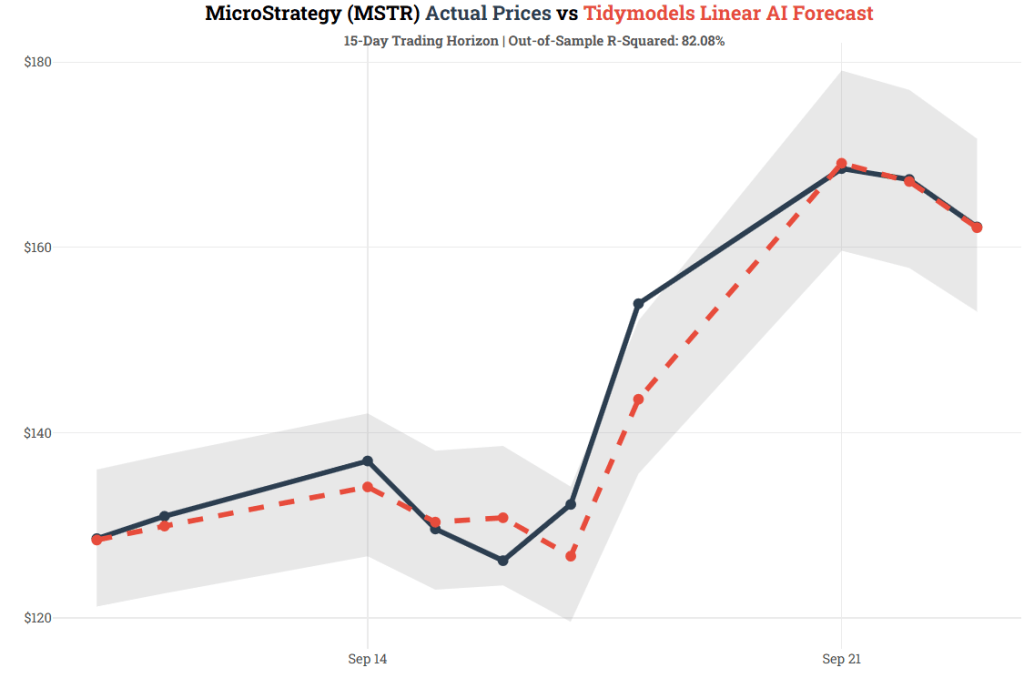 Continue reading →: Quantitative Event-Driven Modeling: BTC Balance Sheet Shocks with SEC EDGAR Filings in R
Executive Summary MicroStrategy (MSTR) has fundamentally transitioned from a traditional enterprise software firm into an equity-based Bitcoin (BTC) holding vehicle and treasury operation. Evaluating MSTR using conventional corporate finance metrics (such as Price-to-Earnings or EBITDA multiples) fails to capture the core driver of its equity valuation: the dynamic Net Asset…
-
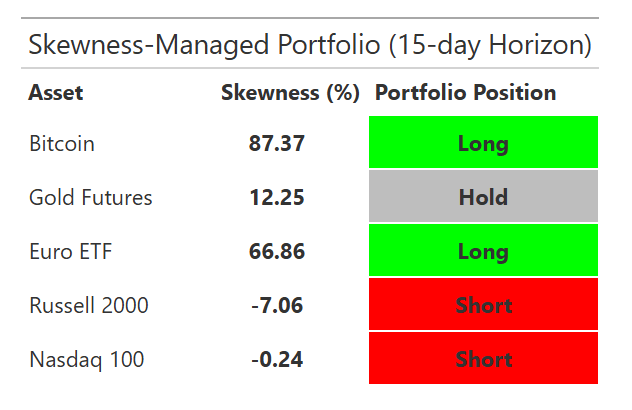 Continue reading →: Skewness-Managed Portfolios: A Practical Guide with R
Introduction Portfolio construction often relies on mean–variance optimization or factor models. Yet, recent research highlights the importance of skewness—the third statistical moment—as a driver of asset returns. Assets with lottery-like payoffs (high positive skewness) tend to be overpriced, while negatively skewed assets are often underpriced. A 66‑page study demonstrates that…
-
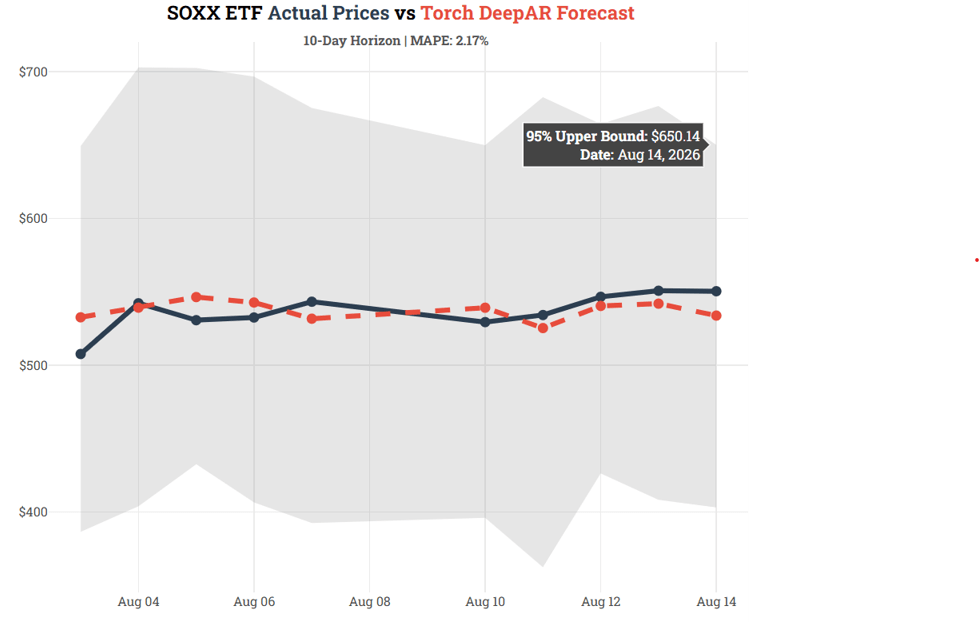 Continue reading →: Breaking the Python Barrier: Building a Pure R-Native DeepAR Engine with LibTorch
Deep learning for time series forecasting in R has historically faced a major architectural hurdle: Python overhead. Frameworks like modeltime.gluonts provide interface wrappers around AWS GluonTS, but they rely on a complex execution chain passing through reticulate, virtual environments, Python serialization, and MXNet/PyTorch backends. To overcome the performance bottlenecks and…

Hello,
I’m Selcuk Disci

The DataGeeek focuses on machine learning, deep learning, and Generative AI in data science using financial data for educational and informational purposes.
Let’s connect
Join the fun!
Stay updated with our latest tutorials and ideas by joining our newsletter.

